Why Chickens Dust Bathe (It's Essential for Health)
If you've ever watched your chickens flop around in the dirt, you might have wondered why do chickens take dust baths. The answer: it's how they look after themselves.
What Is Chicken Dust Bathing & Why Do They Do It?
If you have ever asked why do chickens dust bath so enthusiastically, the answer is simple: it is a natural, instinctive hygiene routine. Chickens dig a shallow hollow in dry soil, sand or fine dirt, then wriggle, flap and roll to work the dust deep into their feathers.
It looks chaotic — sometimes alarming for new keepers — but it's one of the most important things a chicken does for its own wellbeing.
Chickens will dust bathe regularly, often in groups, and usually during the warmest part of the day. It's completely normal and healthy.
Why Do Chickens Cover Themselves in Dirt? Natural Parasite Protection
The primary purpose of dust bathing is pest control. Fine particles coat feathers and skin, suffocating or dislodging external parasites like mites and lice.
Without regular dust bathing, parasite loads can build up quickly — especially in warm Australian conditions where mites thrive.
It's a natural, chemical-free line of defence that chickens rely on instinctively.
Feather & Skin Health
Dust bathing also helps regulate oil on feathers. Chickens produce natural oils from a gland near their tail, and dust helps distribute and absorb excess oil, keeping feathers in good condition.
Clean, well-maintained feathers provide better insulation in winter and sun protection in summer — both important in Australian climates.
Chickens that dust bathe regularly tend to have smoother, shinier plumage and healthier skin.
🍂 Cold-Weather Dust Bathing Tip
Once the moult is over, dust bathing remains critical through cold weather. It helps dislodge any last itchy pin-feathers and conditions the skin against dry, cold air.
If your hens are 'feather-pecking' each other, check if they have access to a dry, fine dust bath first.
What Happens If Chickens Can't Dust Bathe?
Without access to a suitable dust bathing area, chickens may:
- Develop heavy mite or lice infestations
- Show signs of stress, including feather pecking
- Have dull, oily or matted feathers
- Try to dust bathe on hard surfaces, which doesn't work
- Become more susceptible to skin infections
This is one of those welfare basics that's easy to provide — and makes a real difference to flock health.
How to Provide a Simple Dust Bath
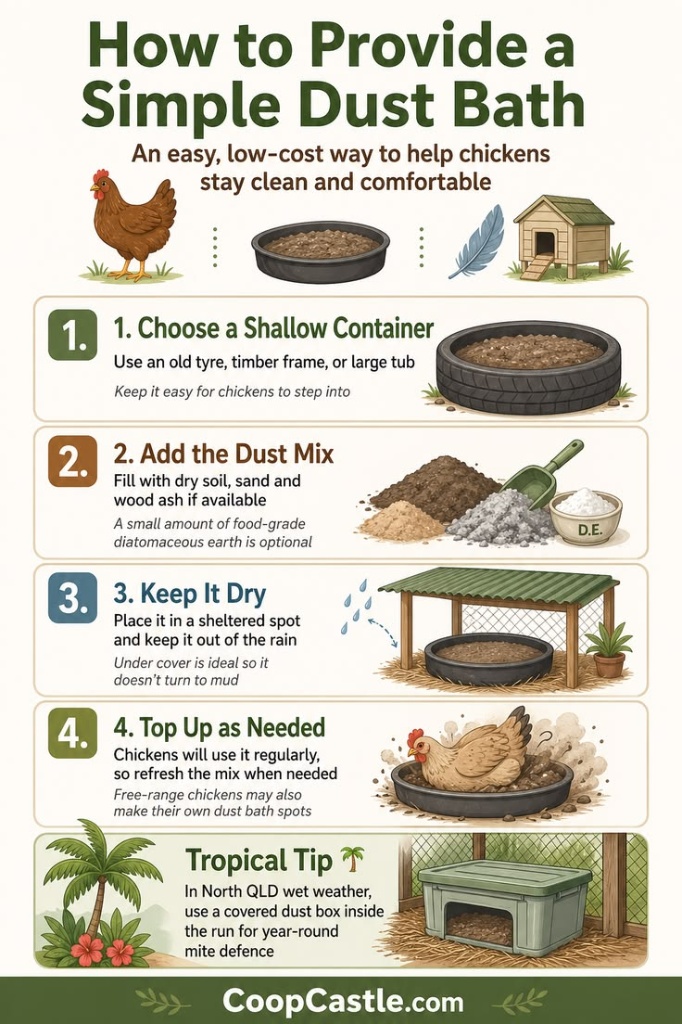
Setting up a dust bath is simple and costs very little. Here is the exact setup from our guide:
Some keepers add a small amount of food-grade diatomaceous earth, though this is optional. The dust itself does most of the work.
If your chickens free-range, they'll often create their own dust bath spots in dry garden beds. Let them — it's a sign of healthy instincts.
🌴 Tropical Tip
In high-humidity areas like North QLD, outdoor dust baths can quickly turn into mud pits during the wet season. For the 'Quiet Business' approach, provide a covered 'Dust Box' inside the run using dry sand and wood ash to ensure they have a 365-day defence against mites.
Sand vs Dirt vs Diatomaceous Earth: What Works Best?
Most Aussie keepers ask which substrate to use. The short answer: a blend beats any single material. Here is how each performs on its own.
Dry topsoil / dirt
The base layer. Fine enough to reach the skin, holds a shallow hollow well, and is free. Must be kept dry — wet soil clumps and won't dust.
Coarse builder's sand
Improves drainage and texture. Prevents the mix compacting. Use coarse (washed) sand — avoid fine play sand, which packs down when damp.
Diatomaceous earth (DE)
Food-grade only. Optional 5–10% sprinkle boosts mite protection but is dusty for humans — wear a mask when refilling. Never use pool-grade DE.
Recommended ratio: 60% dry topsoil, 30% coarse sand, up to 10% wood ash or food-grade DE. Top up monthly and rake before rain.
How Often Should Chickens Dust Bathe?
A healthy hen will dust bathe every 1–2 days when a suitable dry patch is available, usually in the warmest part of the day. It is a group activity — expect several hens to pile into the same hollow.
Frequency drops in wet weather because damp substrate won't dust. This is exactly when parasite pressure climbs, so a covered dust bath inside the run is essential through Australian winters and tropical wet seasons.
A flock that has stopped dust bathing entirely, or is attempting to bathe on concrete or hard soil, is asking for a proper station — treat it as a welfare priority, not a preference.
Signs of a Mite or Parasite Problem
Even a well-provisioned dust bath can't overcome an active infestation. Watch for these red flags — they mean it's time to treat, not just top up the substrate:
- Pale, shrunken combs and wattles
- Feather loss around the vent, belly, or under the wings
- Scabby, red, or crusty skin at the base of feathers
- Raised, whitish scales on legs (scaly-leg mite)
- Frantic scratching or restless behaviour at night
- Red or grey specks visible on perches after dark (red mite)
- Sudden drop in egg production without other explanation
If you spot any of these, treat with a poultry-safe miticide alongside the dust bath — prevention and treatment work together.
Frequently Asked Questions
Why do chickens take dust baths?
Dust bathing is a chicken's natural, instinctive hygiene routine. Fine dry particles work through the feathers to absorb excess preen oil and suffocate external parasites like red mite, scaly-leg mite, and lice. It also conditions the skin and helps regulate body temperature — chickens will dust bathe daily when conditions allow.
Why do chickens cover themselves in dirt?
Covering themselves in dry dirt is not a sign of distress — it is targeted parasite protection. The dust coats feather shafts and skin, blocking the mites' airways and dislodging existing pests. Chickens usually pick warm, dry, sheltered patches and often bathe in small social groups.
How often should chickens dust bathe?
Healthy chickens will dust bathe every 1–2 days if a suitable dry area is available, usually during the warmest part of the day. In wet Australian conditions (or through winter), keep a covered dust bath inside the run so they can maintain the routine 365 days a year.
Should I use sand, dirt, or diatomaceous earth in a dust bath?
The best mix is a base of loose, dry topsoil with coarse builder's sand added for texture. A light sprinkle of hardwood ash or food-grade diatomaceous earth (DE) supercharges the parasite-blocking effect but is optional. Avoid fine play sand alone — it clumps when damp and won't reach the skin.
How do I know if my chickens have a mite or parasite problem?
Watch for pale combs, patchy feather loss (especially around the vent), scabby skin, restless behaviour at night, and visible red or grey specks on the perch after dark. Frantic or attempted dust bathing on hard surfaces is another red flag — the flock is asking for a proper dust bath.
How do I build a chicken dust bath station?
Use a shallow container (old tyre, timber frame, low tub, or half wine barrel) sited under cover so it stays dry. Fill with loose topsoil, add coarse builder's sand for texture, and optionally sprinkle food-grade DE or hardwood ash. Keep it at least 30cm deep in one corner of the run.
Does your run have enough space for a dedicated dust bath area? Check the 2026 Run Size Calculator.
Related reading: Why chickens eat their own eggs · Full Health & First Aid Hub