CoopCastle Breed Guide
White Chicken Breeds in Australia: Best Choices for Backyards
White chooks are easy to spot on the lawn, easy to count at dusk and easy to tell apart from the neighbour's flock. They also include some of the most productive layers you can keep. This guide covers five white breeds that are available in Australia, with plain-English notes on temperament, eggs and how they cope with our weather.
Egg numbers below are typical ranges for a healthy hen in her first couple of years. Real results depend on the strain, feed, season and how much stress the flock is under.
Quick comparison: white breeds at a glance
| Breed | Temperament | Egg Colour | Eggs / Year | Heat / Cold | Good for Beginners |
|---|---|---|---|---|---|
| White Leghorn | Active, flighty | White | 250–300 | Heat: Excellent Cold: Fair | Maybe |
| Light Sussex | Curious, friendly | Cream to light brown | 220–260 | Heat: Good Cold: Good | Yes |
| White Wyandotte | Calm, steady | Light brown | 180–220 | Heat: Moderate–Good Cold: Excellent | Yes |
| White Orpington | Docile, affectionate | Light brown | 150–200 | Heat: Moderate Cold: Excellent | Yes |
| White Silkie | Gentle, tame | Cream | 100–150 (small eggs) | Heat: Moderate Cold: Good if kept dry | Yes |
White Leghorn
Light Sussex
White Wyandotte
White Orpington
White Silkie
White Leghorn
The classic white-egg layer
The White Leghorn is the original high-volume layer. It is light-bodied, quick on its feet and lays plenty of white eggs, often from a young age. It rarely goes broody, so the eggs just keep coming.
Leghorns are alert and lively rather than cuddly. They are not the best choice if you want a bird to hold, and they need a secure run with decent room to move. Their light frames and big combs help them shed heat, which makes them a good pick for hot regions. The same large combs can suffer in frosty weather.
Best suited to keepers who want a steady supply of eggs and have a roomy, well-fenced yard. It is less suited to families who want a hen that sits on a lap.
Light Sussex
A white bird with a black collar
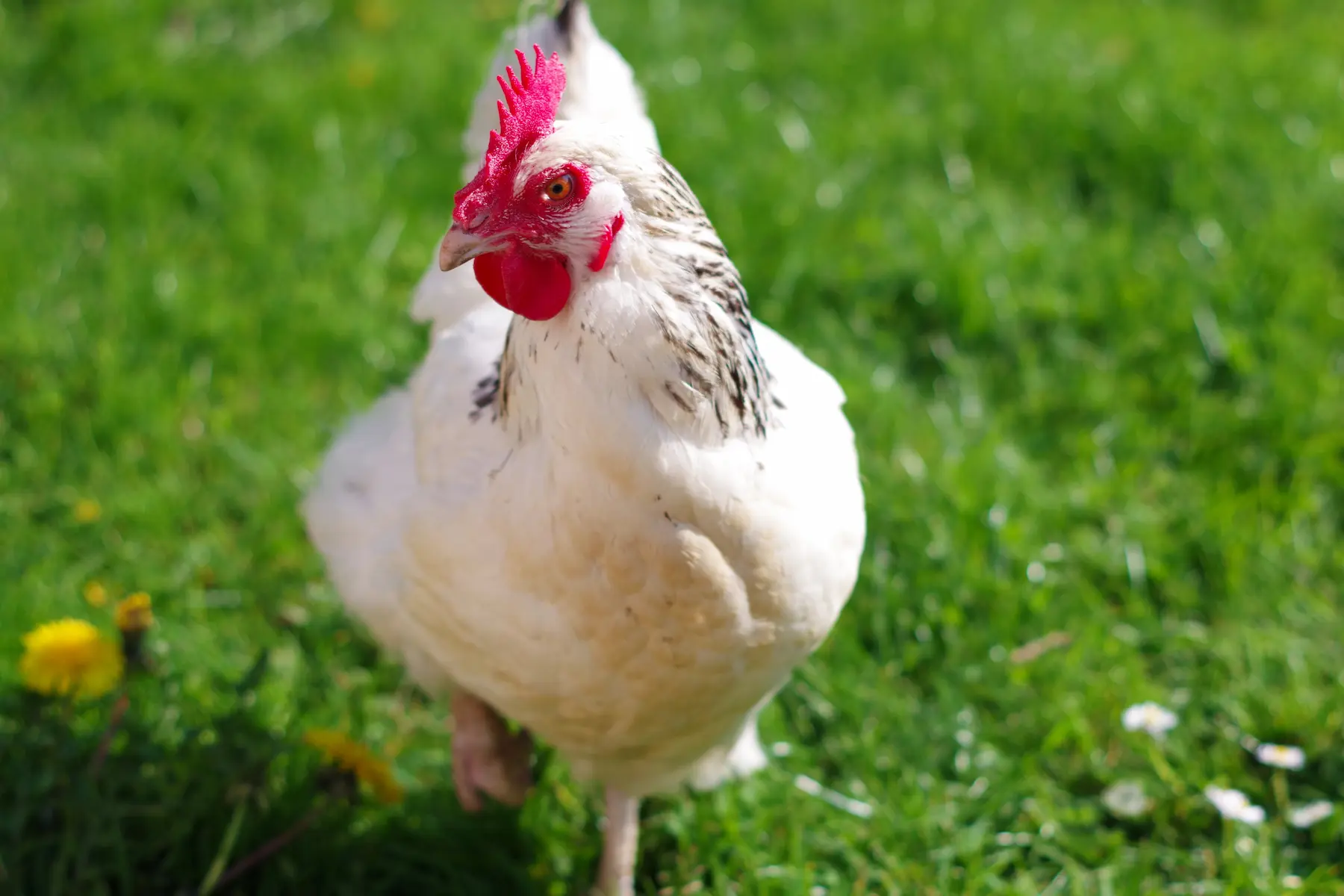
Strictly speaking, the Light Sussex is white with a black-striped neck and black tail and wing tips, not solid white. We have included it because most people searching for a white chicken are happy with it, and it is one of the easiest breeds to keep.
Light Sussex are inquisitive foragers that tend to follow you around the yard. They are a dual-purpose breed, so they are sturdy as well as productive. They cope well with most Australian conditions as long as they have shade and clean water through summer.
Best suited to families and first-time keepers who want a friendly bird that lays well. It is a sensible all-rounder if you can only choose one breed.
White Wyandotte
Calm, rounded and cold-hardy
White Wyandottes have a compact, rounded body and a small rose comb that stands up well to cold. They are a good fit for southern states, the highlands and anywhere with cool winters.
They are generally steady and easy to manage in a mixed flock. In hot areas they need good ventilation, deep shade and plenty of cool water, because their dense feathering holds warmth.
Best suited to cooler regions and to keepers who want a calm hen that gets along with others. Pair it with a shaded run if summers are hot.
White Orpington
Big, fluffy and gentle
The White Orpington is a large, soft-feathered bird with a placid nature, which makes it popular with families and first-time keepers. It lays fewer eggs than the Leghorn or Sussex, but many keepers value the calm temperament more than the count.
Orpingtons can go broody, which is handy if you want a hen to hatch chicks and a nuisance if you don't. Their bulk makes summer the hard part, so plan for shade, airflow and fresh water above 30°C.
Best suited to families and to keepers in cooler areas who value a gentle, fluffy hen over a high egg count.
White Silkie
The fluffy backyard pet
Silkies are kept for their looks and their sweet nature, not for egg production. Their feathers feel like fur, and they are usually easy to handle, so they suit children and small yards.
They lay small cream eggs and often go broody, and they are often used to hatch eggs from other breeds. Their soft plumage does not cope well with mud and soaking rain, so give them a dry, covered run. White Silkies also show dirt quickly.
Best suited to small yards, children and keepers who want a pet first and an egg supplier second. A Silkie also pairs well with larger breeds that are not broody.
Choosing white chooks for your backyard
White feathers stand out against grass and soil. That helps you notice a missing or unwell bird, but it also makes them easy for predators to see, so a fully enclosed, fox-proof run matters just as much as it does for any other colour.
If you want the most eggs, start with the Leghorn or Light Sussex. If you want a calm pet, the Silkie and Orpington are easier to live with. For cooler regions the Wyandotte and Orpington are worth a look. Whatever you choose, work out how many birds your space can hold before you buy.
Keep white birds clean by providing dry bedding and a run that drains well, because mud and droppings show up quickly on pale feathers.
Use our coop size calculator to check how many birds your space suits, compare every breed on the main breeds guide, or see our black and white chicken breeds guide for patterned birds.
Frequently Asked Questions
Which white chicken breed lays the most eggs?
The White Leghorn is usually the top white layer, typically laying around 250–300 white eggs a year. The Light Sussex is also productive, at roughly 220–260 cream to light brown eggs.
Do white chickens lay white eggs?
Not always. White plumage and egg colour are separate traits. White Leghorns lay white eggs, but White Wyandottes and White Orpingtons lay light brown eggs, and Silkies lay cream eggs.
What is the best white chicken for beginners?
The Light Sussex is a good all-rounder for first-time keepers because it is friendly, hardy and productive. White Orpingtons and White Silkies are also gentle and easy to handle.
Are white chickens good in hot weather?
It depends on the breed rather than the colour. Light-bodied Leghorns cope with heat very well. Heavily feathered breeds such as Orpingtons and Wyandottes need more shade, airflow and water. All chickens need shelter and cool water on hot days.
Are white chickens more likely to be taken by predators?
White birds are easy to see, so they should not be left in an unsecured yard, especially at dusk. A fully enclosed run with a secure coop at night protects every colour of chicken.
How many white chickens can I keep in a small backyard?
It depends on the size of your coop and run, and on local council rules. Use our coop size calculator to work out how many birds your space suits, and check your local council's limits before you buy.