CoopCastle Breed Guide
Black Chicken Breeds in Australia: A Backyard Guide
Black chickens look sharp in a garden, and in the sun their feathers often show a green or purple sheen. Several black breeds are also reliable, easygoing backyard birds. This guide covers five black breeds that are available in Australia, with plain-English notes on temperament, eggs and climate.
Egg numbers below are typical ranges for a healthy hen in her first couple of years. They vary with strain, feed, season and stress.
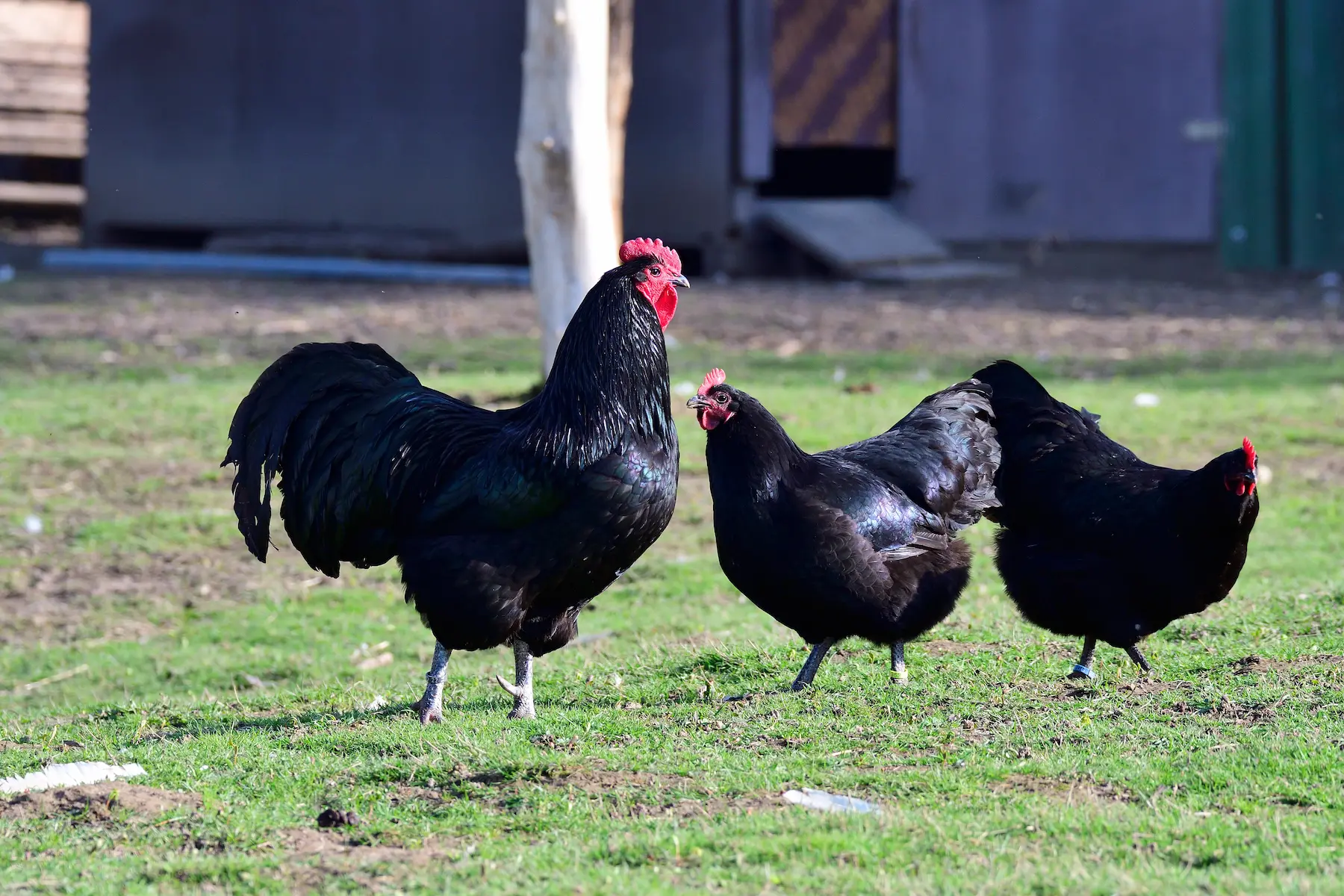
Quick comparison: black breeds at a glance
| Breed | Temperament | Egg Colour | Eggs / Year | Heat / Cold | Good for Beginners |
|---|---|---|---|---|---|
| Australorp | Docile, gentle | Light brown | 250–300 | Heat: Excellent Cold: Good | Yes |
| Black Orpington | Docile, affectionate | Light brown | 150–200 | Heat: Moderate Cold: Excellent | Yes |
| Black Minorca | Active, can be nervous | White | 150–200 | Heat: Good Cold: Fair | Maybe |
| Australian Langshan | Calm, gentle | Light brown | 150–200 | Heat: Moderate Cold: Good | Yes |
| Black Silkie | Gentle, tame | Cream | 100–150 (small eggs) | Heat: Moderate Cold: Good if kept dry | Yes |
Australorp
Black Orpington
Black Minorca
Australian Langshan
Black Silkie
Australorp
Australia's own black chook
The Black Australorp was developed in Australia from Black Orpington stock and is often called our national breed. It is known for steady laying and for a calm, friendly nature.
Australorps cope with most Australian climates, which is why they feature in so many backyard flocks. Their glossy feathers show a green sheen in the sun. If you only keep one black breed, this is the easy one to start with.
Best suited to almost any keeper, from beginners to experienced flock owners. It is the safest first pick among the black breeds.
Black Orpington
A fluffy, placid family bird
Black Orpingtons are large and soft-feathered, with a placid temperament that suits families. They lay fewer eggs than an Australorp but are often kept for their nature as much as their eggs.
They can go broody, so be ready for it. Their size and dense feathering make summer the tricky season, and black plumage soaks up sun, so deep shade, airflow and plenty of cool water are essential in warm areas.
Best suited to families and to keepers in cooler regions who want a gentle, fluffy bird rather than the highest egg count.
Black Minorca
A sleek white-egg layer
The Minorca is a Mediterranean breed with a slim build, a large red comb and large white eggs. It is an active forager that does best with room to roam.
Minorcas can be more nervous than Australorps or Orpingtons, so they suit keepers who are happy with a lively, independent bird. The big comb helps in the heat, but it can be damaged by frost in cold areas.
Best suited to experienced keepers or to anyone with space for a lively bird. If you want a calm lap hen, choose another breed.
Australian Langshan
Tall, upright and calm
The Australian Langshan is a tall, upright black bird with a glossy sheen and a reputation for being quiet and gentle. It is a less common choice than the Australorp, so you may need to look for a breeder rather than a general hatchery.
It suits a keeper who wants a handsome, calm bird more than maximum egg numbers. Give it shade and fresh water in summer.
Best suited to keepers who like a quiet, handsome bird and don't mind searching for a breeder. It is a good choice for a small mixed flock.
Black Silkie
A fluffy pet with a sweet nature
Silkies are bred for their fluffy, fur-like feathers and friendly personalities rather than for egg numbers. They are easy to handle and well suited to children and small yards.
They often go broody and are popular as mother hens for other breeds' eggs. Their soft feathers get waterlogged in wet weather, so a dry, covered run helps.
Best suited to small yards, children and keepers who want a pet first and an egg supplier second.
Choosing black chooks for your backyard
Dark feathers absorb more heat in direct sun, so shade and water matter even more in summer. Put the shade where the birds actually spend their time, and give them more than one water point in hot weather.
For the best mix of eggs and temperament, start with the Australorp. For a calm family bird, add a Black Orpington. If you want something lively with white eggs, the Minorca is worth a look. Work out how many birds your space can hold before you buy.
Check your flock often on hot days, and remember that panting, drooping wings and lethargy are signs a bird is overheating.
Use our coop size calculator to check how many birds your space suits, compare every breed on the main breeds guide, or see our black and white chicken breeds guide for patterned birds.
Frequently Asked Questions
What is the best black chicken breed for beginners?
The Australorp is the easiest all-round choice. It is calm, hardy and a strong layer. Black Orpingtons and Black Silkies are also gentle and easy to handle.
Which black chicken lays the most eggs?
The Australorp is generally the top black layer, typically laying around 250–300 light brown eggs a year. Orpingtons, Minorcas and Langshans usually lay somewhat fewer.
Do black chickens cope with Australian heat?
Many do, but dark feathers absorb more heat in direct sun. Provide plenty of shade, good airflow and cool water. Slimmer breeds such as the Minorca and the Australorp tend to cope better than heavy, fluffy breeds like the Orpington.
Are black chickens really black all over?
Most are black in the feathers but show a green or purple sheen in sunlight. Some individuals show a few white or rusty feathers, which is not unusual.
What colour eggs do black chickens lay?
Feather colour does not decide egg colour. Australorps, Orpingtons and Langshans lay light brown eggs, Minorcas lay white eggs and Silkies lay cream eggs.
Do black chickens need more shade than other colours?
Dark feathers absorb more sunlight, so shade is especially important for black birds on hot days. Place shade where the flock spends most of its time and provide cool water in more than one spot.